


Ever tried to manage a few social media accounts, only to get flagged for ‘suspicious activity’? Or have you missed out on a limited-edition product because your connection was instantly blocked? It’s a common and frustrating problem that often comes down to one simple thing: your digital address. Choose the best proxies for google ads.
Every device on the internet has a unique IP address, which works just like a street address for your computer. It tells websites where you are, and when you use the same one for multiple tasks, sites from Google to Shopify can get suspicious. A proxy server acts as a middleman, giving you a temporary, different address so each connection appears to come from a brand-new visitor.
But here’s the secret not everyone knows: most of the internet’s original addresses are old, recycled, and often already on a blocklist. Now, imagine a modern system with a virtually unlimited supply of fresh, clean addresses that have never been used before. That’s the “v6” in an IPv6 proxy, and it’s a complete game-changer.
Because these IPv6 addresses are so new, they have no negative history, making them far less likely to trigger security flags. This is precisely what IPv6 proxies are used for: giving you a clean slate for every connection.
What is a Proxy, in Simple English?
So, how do you manage multiple online accounts or scoop up limited-edition products without getting flagged? The secret is a tool called a proxy server. Imagine it as a helpful middleman for your internet connection. Instead of going directly to a website, your request first goes to the proxy, which then visits the site for you. This simple rerouting is the key to operating successfully online at scale.
This process works like an online disguise. Because the proxy makes the final connection, the website you visit only sees the proxy’s IP address, not your real one. To the website, it appears as if you’re a visitor from a completely different city or even country. Using a proxy is one of the most effective ways to gain anonymity and prevent websites from tracking your true location and identity.
This is incredibly useful for anyone who needs to look like a different person with each connection. If you manage ten client social media accounts, for instance, you can use ten different proxies. To the platform, it looks like ten unique users, drastically reducing the risk of your accounts being linked and banned. However, for this to work, you need clean addresses that aren’t already on a blocklist. The quality of those addresses is what truly matters when you decide to buy IPv6 proxies.
The Problem with Old Internet Addresses (IPv4): Why You Keep Getting Blocked
Ever used a proxy only to be blocked immediately? The issue often isn’t the proxy itself, but the age of the internet address it gives you. The original system for these addresses, called Internet Protocol version 4 (IPv4), is like an old city’s telephone network that was built with only seven-digit numbers. In the beginning, it seemed like more than enough, but as the population exploded, we simply ran out of new numbers to assign.
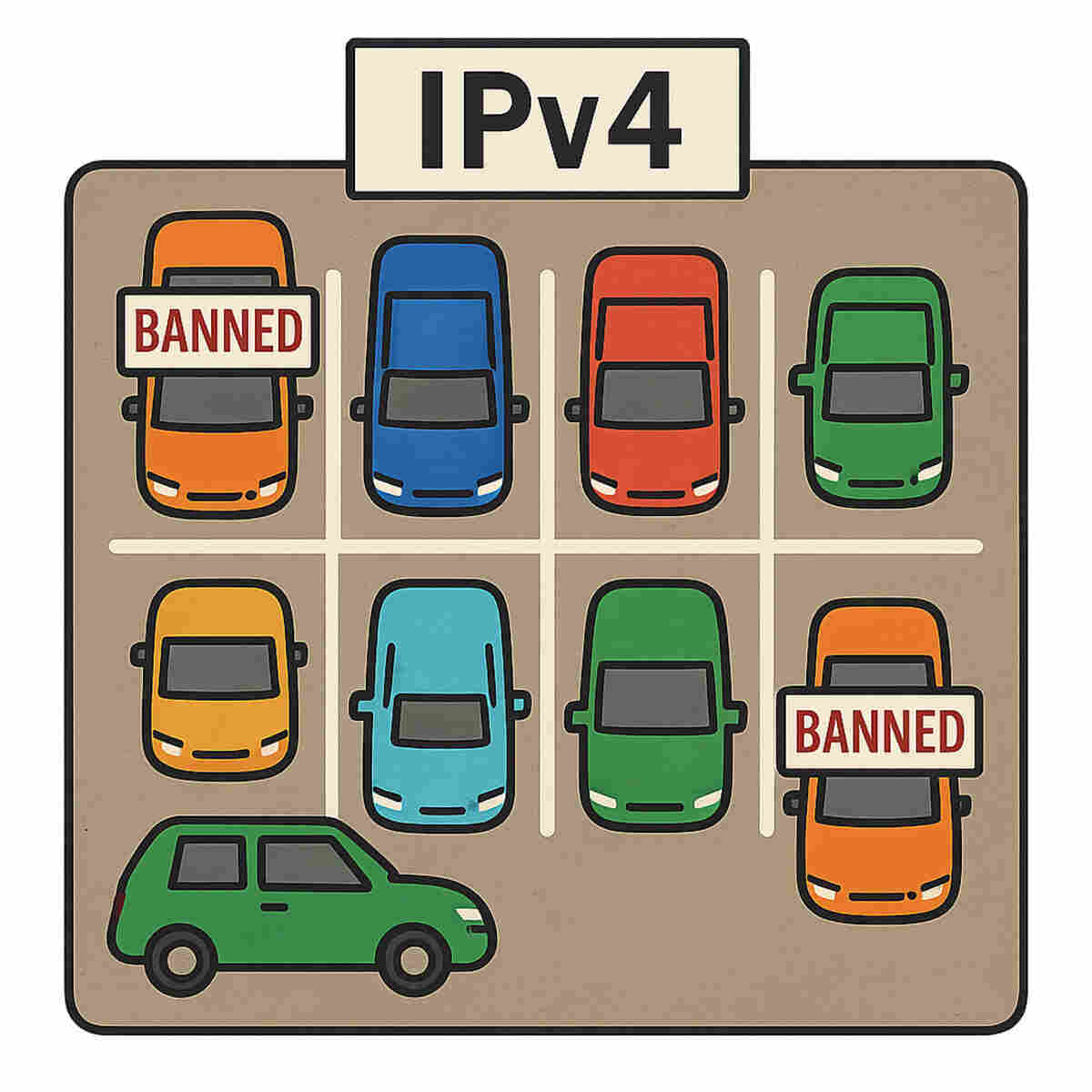
The internet faced the same problem. We have essentially run out of new, unused IPv4 addresses. To keep things running, old addresses are constantly being recycled and reassigned. Think of it like a crowded parking lot where every spot is always taken. As soon as one car leaves, another is guided into the same spot. This constant reuse is the core of the issue when we compare IPv6 vs IPv4 proxies.
What if the previous owner of your recycled address used it for spamming or other shady activities? That address is now “dirty”—it’s already on blocklists for major websites like Google, Instagram, or sneaker retailers. When your proxy assigns you this flagged address, you inherit its bad reputation. The website doesn’t see you; it sees a known troublemaker and denies access before you can even do anything.
Ultimately, using a proxy with a recycled IPv4 address is a complete gamble. You might get a clean one, but you’re just as likely to get a burned-out address that’s useless for your task. This is why so many people fail when trying to manage accounts or buy products. Fortunately, this problem of a limited and dirty address space has a modern solution.
IPv6 Proxies: Your Source of Unlimited, Fresh Addresses
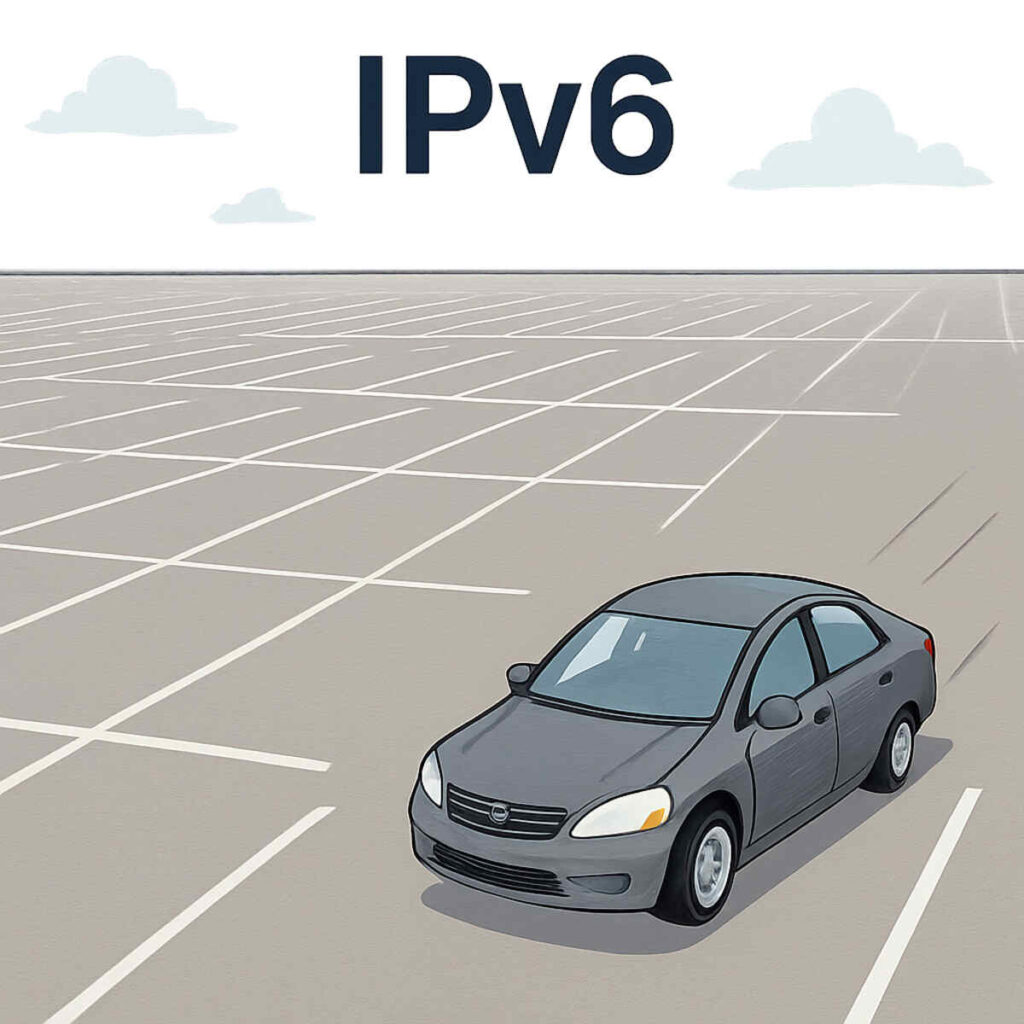
If the old IPv4 system is a tiny, overflowing parking lot, then its modern replacement, IPv6, is a brand-new lot that stretches over the horizon, with trillions of empty, pristine spots waiting. This new system was designed with a simple goal: to provide so many unique internet addresses that we could never realistically run out. This vast, untouched supply is the secret weapon you get when you buy IPv6 proxies.
The most significant advantage of this enormous pool is that the addresses are overwhelmingly new. When a proxy gives you an IPv6 address, it’s almost certainly a “virgin” IP—one that has never been used before. It comes with no baggage. Unlike a recycled IPv4 address that might have a bad reputation, your IPv6 address is a completely clean slate.
For you, this clean slate is a game-changer. Websites that are quick to block suspicious activity—like social media platforms, e-commerce sites, and ticket vendors—see your connection as a fresh, unique visitor. One of the greatest dedicated IPv6 proxy benefits is that you aren’t flagged for the past actions of a stranger. This dramatically increases your chances of success, allowing your accounts to stay safe and your purchase attempts to go through without a hitch.
This access to a near-infinite supply of clean addresses is the core reason IPv6 proxies are so effective and surprisingly affordable.
Benefit #1: Get More Proxies for Less Money
The incredible abundance of IPv6 addresses has a direct, positive impact on price. Think about any limited resource—like front-row concert tickets or beachfront property. Scarcity drives the cost up. The old IPv4 addresses are scarce, and their prices reflect that. In contrast, IPv6 addresses are so plentiful that providers can offer them at a much lower cost, making cheap IPv6 proxies the most budget-friendly option for getting fresh, unique IPs.
In practice, this means your money goes significantly further. For the same price you might pay for a small handful of older IPv4 proxies, you can often get hundreds, or even thousands, of clean IPv6 addresses. When you buy IPv6 proxies, you are not just investing in newer technology; you are making a smarter financial choice that allows you to scale up your operations without a massive increase in cost. This volume is essential for tasks that require a large number of unique connections.
For anyone running more than a few social media accounts or gathering data from websites, this cost-effectiveness is a game-changer. The affordability of cheap datacenter IPv6 proxies makes it feasible to assign a unique IP to every single account or connection, drastically reducing your operational costs.
Benefit #2: Achieve Higher Success Rates for Web Scraping
Beyond just saving money, the primary advantage of IPv6 proxies is that they work more reliably. If you’ve ever tried to gather product prices, stock levels, or other data from a website, you’ve likely run into a frustrating wall: the “Access Denied” message. This is often the work of automated anti-scraping systems designed to spot and block any activity that doesn’t look like a normal human visitor.
These systems are on high alert for too many requests coming from a single IP address in a short time. This is where the massive, clean pool of IPv6 addresses becomes your secret weapon. Because your IPv6 proxy is almost certainly brand new and has no negative history, the website’s security system has no initial reason to be suspicious. You start with a clean slate every single time.
For larger jobs, this is where rotating IPv6 proxies for web scraping truly shines. Instead of using just one IP, your scraping tool can automatically switch to a fresh, clean address for every new request. The process is simple and powerful:
- Your scraper connects with a clean IPv6 proxy.
- The website sees a unique, non-flagged visitor.
- Your request is successful, and you get the data before rotating to the next clean IPv6 address.
This strategy makes your activity look like it’s coming from hundreds of different individuals, allowing you to gather data without interruption. A good IPv6 proxy service handles this rotation for you, and since cheap datacenter IPv6 proxies are so affordable, having a massive pool to rotate through is easy.
Benefit #3: Securely Manage Multiple Online Accounts
The same principle that makes your data gathering successful—using unique IPs—is also vital for keeping your online profiles safe. If you manage multiple social media or e-commerce accounts from one computer, perhaps for your business or clients, you’re facing a hidden risk. Platforms like Instagram, Facebook, and Amazon can see that all these accounts are accessed from the same IP address. If one account gets flagged, the platform might assume they’re all connected and suspend them all in a “chain-reaction” ban.
This is where account isolation becomes essential, and it’s one of the key dedicated IPv6 proxy benefits. Instead of all your accounts sharing your home IP, you assign one unique IPv6 proxy to each profile. Think of it as giving each account its own private, unlisted mailing address; they are completely separate. This simple practice answers the question of is an IPv6 proxy safe to use with a resounding yes. Since there’s no digital trail linking them together, an issue with one account won’t jeopardize the others.
For a freelancer managing several client accounts, this means each client is protected within their own digital bubble. An IPv6 proxy service makes this easy to set up, providing a professional-grade firewall between your valuable online assets.
Benefit #4: Gain a Competitive Edge in Sneaker Drops and Sales
For anyone who’s tried to grab limited-edition sneakers or concert tickets online, you know the frustration. Sites like Nike, Supreme, and Ticketmaster often enforce a “one per customer” rule, but what that really means is “one per IP address.” This is where the strategy of using an IPv6 proxy for sneaker bots and manual checkouts comes into play. By assigning a different, clean IPv6 proxy to each entry or task, you appear as dozens or even hundreds of unique shoppers. This simple move bypasses the site’s primary defense and massively multiplies your chances of success.
But having many unique addresses is only half the battle in these high-speed events. Sneaker drops are over in a matter of seconds, meaning your connection speed is just as critical as your identity. This is why most successful users opt for what are known as datacenter proxies. These proxies come from powerful commercial servers with incredibly fast internet connections, designed for pure speed. The connection is far faster than a typical home internet line, ensuring your request hits the server before everyone else’s, giving you a crucial time advantage when every millisecond counts.
The ultimate strategy, then, combines these two elements: the massive availability of clean IPv6 addresses with the raw speed of a datacenter connection. When you buy IPv6 proxies of this type, you’re not just getting a disguise; you’re getting a high-performance tool built for competition. Many guides recommend finding cheap datacenter IPv6 proxies to build a large pool of entries without breaking the bank.
Shared vs. Dedicated IPv6 Proxy: Which One Do You Need?
As you begin looking for a provider, you’ll immediately face the choice of a shared vs dedicated IPv6 proxy. The difference is simple but has a major impact on your success. Think of it like the difference between using public WiFi at a café versus having your own private internet connection at home. Both get you online, but the experience and security are worlds apart.
A shared proxy is the public WiFi in this scenario. It’s an IP address that you share with several other users. The main advantage is cost—they are significantly cheaper. However, this comes with a risk. If another user on your shared IP gets it blocked from a website, it’s blocked for you, too. This “bad neighbor” effect can disrupt your tasks without any warning.
On the other hand, a dedicated proxy is your private home connection. Only you have access to that IP address. This is where the core dedicated IPv6 proxy benefits shine: you get maximum speed, top-tier security, and complete control over the IP’s reputation. Since you’re the only one using it, you know it’s clean.
Here’s the trade-off at a glance:
- Shared Proxy: Cheaper, but can be slower and riskier due to other users.
- Dedicated Proxy: More expensive, but offers guaranteed speed and a clean history.
So, which one is right for you? The answer depends on your task. For high-stakes activities where getting blocked would be a disaster—like managing important client accounts or entering a major sneaker raffle—investing in a dedicated proxy is worth it. For lower-risk jobs like general web scraping or testing, a shared proxy can be a perfectly fine, budget-friendly starting point.
How to Choose a High-Quality IPv6 Proxy Service
Now that you know whether you need a shared or dedicated proxy, the next step is picking a reliable company. A great IPv6 proxy service isn’t just about selling you an IP address; it’s about providing a stable, fast, and supportive experience. Rushing this decision can lead to slow connections and failed tasks, so use this quick checklist to evaluate any provider before you buy.
Your checklist for a quality provider should include these five non-negotiables:
- A Large and Diverse IP Pool: More IPs means a higher chance of getting a clean, unused address.
- Guaranteed High Speed and Uptime: Ensures your tasks run without interruption.
- Flexible Authentication Methods: How you’ll access the proxy.
- IPv4 Fallback Support: A critical feature for maximum compatibility.
- Responsive 24/7 Customer Support: For when you inevitably have a question.
Authentication is simply how the service knows it’s you. User/Pass is the easiest—just like logging into a website. The other common method, IP whitelisting, automatically approves your home or office internet connection, which is convenient but less flexible if you’re on the move. Meanwhile, IPv4 Fallback is your safety net. Since not all websites have upgraded to IPv6 yet, this feature acts like a universal travel adapter, ensuring your proxy can connect to older IPv4 sites without a hitch. The best providers, including top-tier residential IPv6 proxy providers, always include this.
Are IPv6 Proxies Detectable? The Honest Answer
This leads to a crucial question: can a website actually tell you’re using a proxy? The honest answer is yes, it’s possible. Most websites that check for proxies don’t detect the proxy itself; they identify the IP’s origin. They can see if the IP address belongs to a commercial datacenter instead of a typical home internet provider. Think of it like a letter’s return address—it’s easy to tell if it came from a corporate office park instead of a residential street.
The real question, however, is whether this detection actually matters for your task. For extremely high-security sites, like your bank, seeing a datacenter IP might raise a flag. But for the vast majority of uses—like managing social media accounts, checking prices on e-commerce sites, or entering sneaker raffles—the IP’s history is far more important than its origin. This is a key difference when considering IPv6 vs IPv4 proxies for anonymity; a brand-new, clean IPv6 address is seen as much more trustworthy than a recycled, overused IPv4 address, even if the IPv6 IP comes from a datacenter.
Ultimately, for most people, the answer to “Is an IPv6 proxy safe to use?” is a resounding yes. The immense benefit of using a fresh, un-flagged IP address from the vast IPv6 pool almost always outweighs the small risk of a site blocking you simply for using a datacenter proxy. You’re far more likely to get blocked for using a “dirty” IP than for using a clean one from a known source.
Conclusion: Your Next Steps with IPv6 Proxies
You now understand that many online blocks and restrictions stem from the use of old, recycled IPv4 addresses. The solution is the modern IPv6 system, which provides a virtually unlimited supply of fresh, clean IP addresses that avoid the negative history plaguing the older network.
Putting this knowledge into practice is straightforward. First, clarify your main task: managing social media, scraping web data, or securing limited-edition products. This focus will help you decide between a cost-effective shared proxy for general use or a more secure dedicated IPv6 proxy for your most critical projects. With that decision made, use the provider checklist to find a reliable and effective service.
You no longer need to view online roadblocks as dead ends. Instead, you can see them as simple problems you now have the right tool to solve. Armed with this advantage, you are ready to buy IPv6 proxies with confidence and achieve your goals.
