

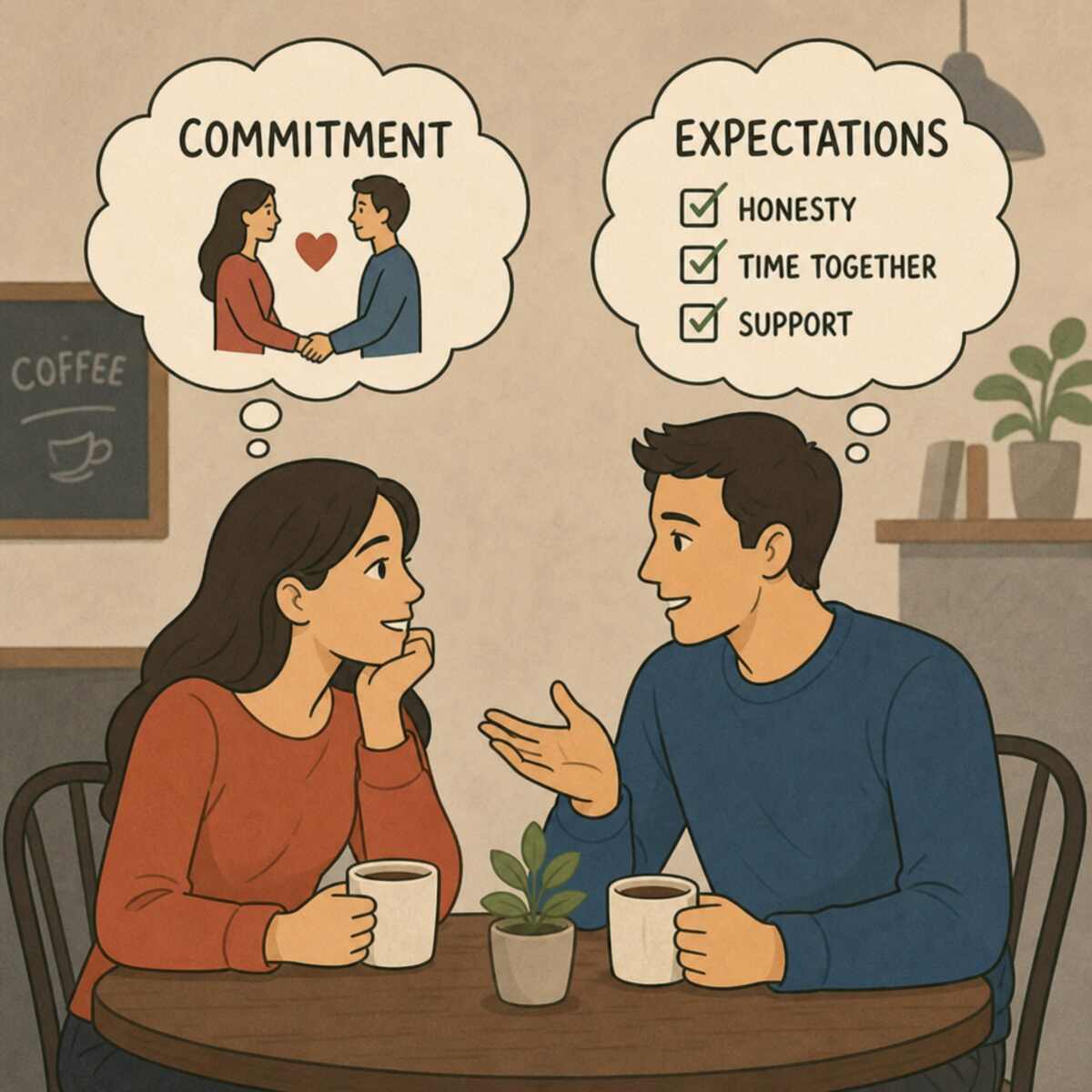

Dating and being in a relationship can look similar from the outside, but they are not the same experience. Dating is usually about exploring connection, compatibility, and attraction, while a relationship typically involves clearer commitment, shared expectations, and a stronger sense of emotional partnership. Understanding the difference helps you communicate honestly, avoid assumptions, and decide whether the connection you are building matches what you actually want. The Interesting Info about ısparta escort.
What is the difference between dating and a relationship?
The simplest difference is that dating is the process of getting to know someone, while a relationship is a mutually understood commitment to keep building something together. Dating may be casual, exclusive, serious, or undefined, depending on what both people have discussed. A relationship usually means both people have agreed, either directly or very clearly through conversation and behavior, that they are partners.
This distinction matters because many misunderstandings happen in the space between attraction and commitment. One person may think, “We talk every day, so this is basically a relationship,” while the other may think, “We are still just seeing where this goes.” Neither person is necessarily wrong, but the lack of clarity can create hurt feelings.
When people search for “relationship versus dating,” they are often trying to answer a deeper question: “Where do we stand?” That question deserves more than guesswork. It deserves honest communication, self-awareness, and a willingness to define what both people want.
Definitions that make the difference clearer
Before comparing the two, it helps to define each term in practical, everyday language. People use “dating” and “relationship” differently depending on age, culture, values, and personal history, but there are common patterns.
Dating means exploring connection
Dating is the stage where two people spend time together to see whether there is romantic potential. It may include going out, texting regularly, talking on the phone, being physically affectionate, or meeting each other’s friends. But unless both people have agreed otherwise, dating does not automatically mean commitment.
Dating can be light and casual, or it can be intentional and serious. Someone may date because they want companionship, because they are open to love, or because they are actively looking for a long-term partner. The important point is that dating is usually an evaluation stage. You are learning whether your values, lifestyles, communication styles, and emotional needs fit together.
Healthy dating includes curiosity and honesty. You do not need to reveal your entire life story on the first date, but you should avoid pretending to want something you do not want. If your goal is a committed partnership, say so when the timing feels appropriate. If you are not ready for commitment, that also needs to be clear.
A relationship means agreed commitment
A relationship is a more defined romantic partnership. It usually includes emotional investment, consistency, exclusivity or clearly agreed boundaries, and a sense that both people are choosing each other on purpose. In a relationship, decisions tend to include the other person more often, and both partners typically expect reliability, respect, and communication.
A relationship does not have to look the same for everyone. Some couples are exclusive. Some practice ethical non-monogamy with explicit agreements. Some move quickly toward long-term plans, while others build slowly. What makes it a relationship is not one specific rule, but mutual understanding.
In other words, a relationship is not created by assumptions. It is created by alignment. Both people understand what they are building, what boundaries matter, and how they are expected to show up for each other.
“Seeing someone” sits in the middle
Many people use phrases like “talking,” “seeing someone,” or “hanging out” because they are not sure what label fits. This middle stage can be exciting, but it can also be confusing. You may be spending a lot of time together without knowing whether the connection is casual, exclusive, or headed toward commitment.
The middle stage is not automatically a problem. It can give both people time to observe compatibility without rushing. But if one person starts feeling anxious, attached, or uncertain, it may be time for a direct conversation.
A helpful approach is to ask for clarity without demanding an immediate life plan. For example: “I’m enjoying spending time with you, and I’d like to understand what you’re looking for so we can stay on the same page.” That kind of statement is calm, respectful, and clear.
The key differences between dating and being in a relationship
The difference between relationship versus dating becomes easier to understand when you look at daily behavior, not just labels. Labels matter, but consistency, communication, and expectations reveal the real nature of the connection.
Commitment level
Dating may involve interest, attraction, and effort, but the level of commitment can vary widely. You might go on a few dates with someone and still be open to meeting other people. You might date one person consistently but not yet know whether you want a committed future.
A relationship usually includes a stronger commitment to the partnership. Both people have chosen to prioritize each other in a more defined way. This does not mean every relationship is headed toward marriage or lifelong commitment, but it does mean the connection has moved beyond casual exploration.
The practical implication is simple: do not assume commitment based only on time spent together. Some people can date for months without feeling committed, while others define the relationship after a few weeks. The timeline matters less than the conversation.
Exclusivity and boundaries
Dating does not always mean exclusivity. Some people date multiple people until they have agreed to focus on one person. Others prefer to date one person at a time, even before there is a formal relationship. Both approaches can be valid if everyone involved is honest.
A relationship often includes exclusivity, but not always. What matters is that boundaries are discussed and respected. If exclusivity matters to you, it is fair to say that. If you are comfortable with a different arrangement, that also needs to be transparent.
One of the most practical pieces of relationship advice is to avoid silent contracts. A silent contract is an expectation you hold but never communicate, then feel hurt when the other person does not meet it. Boundaries work best when they are spoken, specific, and mutual.
Emotional responsibility
When dating casually, emotional responsibility still matters. You should be kind, honest, and respectful. However, the emotional expectations may be lighter because the connection is still developing.
In a relationship, emotional responsibility is deeper. Partners generally expect each other to communicate through conflict, consider each other’s feelings, and offer support during stressful times. A partner is not a therapist, parent, or emotional rescue team, but they are usually part of your support system.
This is where maturity becomes important. A healthy relationship requires more than chemistry. It requires the ability to listen, apologize, repair after conflict, and make choices that protect the connection.
Future planning
Dating often focuses on the present: Do we enjoy each other? Are we attracted to each other? Do we want another date? Those questions are valid and important.
A relationship usually brings more future-oriented thinking. Partners may discuss travel, family expectations, career goals, finances, living arrangements, or long-term values. These conversations do not need to happen all at once, but they gradually become more relevant.
Future planning is not about pressuring the relationship to move faster. It is about discovering whether your lives can realistically fit together. Two people can care about each other deeply and still want different futures.
Public acknowledgment
Dating can be private, especially in the early stages. You may not introduce someone to family or include them in major life events right away. That privacy can be healthy while trust is still forming.
In a relationship, public acknowledgment often becomes more natural. Partners may meet each other’s friends, attend events together, or refer to each other as boyfriend, girlfriend, partner, or another chosen term. Public acknowledgment signals that the connection has a place in each person’s real life, not just in private moments.
Still, privacy is not automatically suspicious. Some people are cautious because of past experiences, family dynamics, or personal preference. What matters is whether the level of openness feels respectful and consistent with what both people agreed to.
Why the gray area can feel so confusing
The gray area between dating and a relationship can be emotionally intense because it combines closeness with uncertainty. You may feel attached before anything is defined. You may act like partners in some ways while avoiding the conversation that would confirm what you are.
Modern communication can make this even more confusing. Daily texting, social media interaction, and casual intimacy can create a feeling of closeness quickly. But closeness is not the same as commitment. Someone can enjoy your company, care about you, and still not be ready or willing to enter a relationship.
Confusion also grows when people fear that asking for clarity will “ruin the vibe.” In reality, respectful communication usually protects the connection. If a simple question about expectations scares someone away, that tells you something important about their readiness or compatibility.
A clear conversation may not always lead to the answer you want, but it will help you make better choices. Uncertainty can feel romantic for a while, but long-term ambiguity often becomes emotionally draining.
Signs you are dating, not yet in a relationship
It is possible to like someone very much and still be in the dating stage. Recognizing this can help you stay grounded and avoid moving emotionally faster than the situation supports.
You may still be dating if:
- There has been no direct conversation about commitment. You spend time together, but no one has clearly said you are partners.
- Plans are short-term or inconsistent. You mostly make plans a few days at a time, and there is little discussion of the future.
- You are unsure whether they are seeing other people. Exclusivity has not been discussed, or the answer feels unclear.
- You hesitate to express needs. You worry that asking for consistency, communication, or clarity will seem like “too much.”
- The connection is mostly private. You may not have met important friends, family members, or people in each other’s everyday life.
- Conflict is avoided instead of handled. If something feels uncomfortable, one or both people pull away rather than talk it through.
- The label feels uncertain. You do not know how to introduce them or explain the connection to others.
These signs do not mean the connection is doomed. They simply suggest that the relationship has not been clearly defined. If you want more, the next step is not to overanalyze every text. The next step is to communicate.
Signs the connection has become a relationship
A connection usually becomes a relationship when both people show consistent commitment and have a shared understanding of what they are building. The label may come through a direct conversation, or it may be confirmed by repeated conversations about exclusivity, expectations, and future direction.
Signs you are in a relationship may include:
- You have clearly discussed where you stand. Both people know the connection is committed, exclusive, or otherwise defined.
- You show up consistently. Communication, plans, affection, and effort are steady enough to create trust.
- You consider each other in decisions. You do not need permission for every choice, but your partner matters in your planning.
- You handle conflict with care. Disagreements are addressed rather than ignored, punished, or turned into power struggles.
- You are integrated into each other’s lives. Friends, routines, celebrations, and responsibilities gradually become more connected.
- You share relationship goals. You may not agree on every detail, but you have a compatible vision for the direction of the partnership.
- You feel emotionally safe enough to be honest. You can express needs, fears, and boundaries without constantly fearing rejection.
A healthy relationship is not defined by perfection. It is defined by mutual effort, respect, repair, and clarity. If the relationship has a label but lacks these qualities, the label alone will not make it secure.

How do you know when it is time to define the relationship?
It is time to define the relationship when your emotional investment has grown enough that uncertainty is affecting your peace, choices, or expectations. You do not need to wait for a perfect moment, a specific number of dates, or a dramatic sign. If clarity would help you act with more honesty and self-respect, the conversation is appropriate.
Many people delay the conversation because they fear rejection. That fear is understandable. But avoiding the topic does not protect you from the truth; it only delays your ability to respond to it.
You might be ready to define the relationship if you want exclusivity, if you are turning down other romantic opportunities, if you are becoming emotionally attached, or if you need to know whether your long-term goals align. You might also need the conversation if your current arrangement is causing anxiety, jealousy, or confusion.
The best time to talk is when both people are calm and not in the middle of conflict. Avoid bringing it up as an accusation, a test, or a reaction to insecurity. Instead, frame it as a mutual check-in.
You could say:
- “I’ve really enjoyed getting to know you, and I’d like to talk about what we both want moving forward.”
- “I’m at a point where I’m interested in being exclusive. How are you feeling about that?”
- “I don’t want to assume we are on the same page, so I’d like to check in about what this is becoming.”
- “I’m looking for a relationship, and I want to be honest about that. Is that something you see as a possibility with us?”
The goal is not to force the other person into your preferred answer. The goal is to understand whether your needs and intentions match.
Practical relationship advice for navigating the transition
Moving from dating into a relationship can feel exciting and vulnerable. You are not only asking, “Do we like each other?” You are asking, “Can we build trust together?” That shift requires communication, patience, and emotional honesty.
Be clear about what you want
Clarity starts with you. Before asking the other person what they want, take time to understand your own needs. Are you looking for exclusivity? A long-term partnership? A slow but intentional connection? Companionship without major commitment?
There is no universally correct answer, but there is a responsible one: be honest. If you say you are fine with casual dating when you are secretly hoping for commitment, resentment may build. If you promise commitment when you know you are unavailable, the other person may get hurt.
Self-honesty is not selfish. It is the foundation of respectful dating.
Watch behavior as much as words
Words matter, but patterns matter too. Someone may say they care about you but remain inconsistent, unavailable, or vague. Another person may be less verbally expressive but show commitment through reliability, kindness, and follow-through.
Look for alignment between what someone says and what they do. Do they make plans and keep them? Do they communicate if something changes? Do they respect your boundaries? Do they show interest in your life beyond convenience or attraction?
A relationship is built through repeated actions. Grand statements can feel wonderful, but everyday consistency is what creates trust.
Do not use labels to fix incompatibility
Defining the relationship can bring clarity, but it cannot fix major incompatibilities by itself. If someone is emotionally unavailable, disrespectful, dishonest, or uninterested in your needs, becoming “official” will not automatically change that pattern.
Sometimes people push for a label because they hope it will reduce anxiety. A label can help if the relationship is healthy and both people are ready. But if the core issue is poor communication or mismatched intentions, the label may only create a false sense of security.
Before moving forward, ask yourself whether the relationship is already showing signs of respect and emotional safety. Commitment should deepen a good foundation, not cover up a weak one.
Keep your own life active
Healthy dating and healthy relationships both require a strong sense of self. It is natural to want to spend time with someone you like, especially in the early stages. But abandoning your routines, friendships, hobbies, or goals can create imbalance.
A strong partnership should add to your life, not replace it. Continue investing in your personal growth, physical health, friendships, and responsibilities. This helps you make choices from confidence rather than fear.
It also gives the relationship room to breathe. Two whole people choosing each other usually create a healthier dynamic than two people trying to become each other’s entire world.
Setting relationship goals that actually help
Relationship goals are not just cute photos, big milestones, or romantic gestures. Real relationship goals are the shared habits, values, and decisions that help a partnership become healthier over time. They give both people a clearer sense of what they are working toward.
Good relationship goals should be practical, mutual, and realistic. They should focus less on appearing perfect and more on building trust, communication, and emotional safety.
Helpful goals might include:
- Communicate before resentment builds. Instead of waiting until frustration turns into an argument, agree to bring up concerns early and respectfully.
- Protect quality time. Set aside time to connect without constant distractions, especially during busy seasons.
- Respect individual space. A strong relationship allows both closeness and independence.
- Handle conflict without cruelty. Commit to avoiding insults, threats, silent punishment, or bringing up old wounds just to win.
- Discuss future expectations honestly. Talk about values, family, money, lifestyle, and long-term hopes before assumptions harden.
- Celebrate small forms of effort. Appreciation helps partners feel seen, not taken for granted.
- Keep learning each other. People change. A healthy relationship stays curious rather than assuming everything is already known.
These goals are useful whether you are newly dating, newly committed, or years into a partnership. The point is not to create a flawless relationship. The point is to create a relationship where both people are willing to grow.
Common examples of dating versus relationship situations
Examples can make the distinction easier to recognize. Real life is rarely neat, but these scenarios show how the same behavior can mean different things depending on communication and expectations.
Example 1: You text every day but have not discussed exclusivity
Daily texting can feel intimate. It may suggest interest, comfort, and emotional closeness. But it does not automatically mean you are in a relationship.
If neither person has discussed exclusivity or commitment, you are likely still dating or in an undefined stage. That does not mean the connection is meaningless. It means you should not assume more than has been communicated.
A practical next step would be to say, “I like how connected we’ve been, and I’m curious whether you see this moving toward something exclusive.” This keeps the conversation open without making an accusation.
Example 2: You have met each other’s friends and make future plans
Meeting friends and making plans weeks or months ahead can be a sign that the connection is becoming more serious. It shows that both people may be integrating each other into their lives. Still, it is best to confirm what that means.
Some people introduce dates to friends casually, while others only do that when they are serious. The action matters, but the meaning behind it may differ. A direct conversation helps avoid confusion.
If the behavior is consistent, affectionate, and future-oriented, the relationship may be close to becoming official. The healthiest move is to clarify, not assume.
Example 3: One person wants commitment and the other wants to “see what happens”
This is one of the most common dating dilemmas. “Seeing what happens” can be reasonable in the early stages. But if one person wants a committed relationship and the other remains vague for a long time, the mismatch can become painful.
The person who wants commitment should not pretend to be comfortable indefinitely. The person who is unsure should not offer just enough hope to keep the other person attached. Honest timing matters.
A fair response might be, “I respect that you are still figuring it out, but I know I’m looking for a relationship. If we are not moving in the same direction, I may need to step back.” That is not pressure. It is self-respect.
Example 4: You are exclusive but not emotionally close
Exclusivity is important for many people, but it is not the only ingredient in a relationship. Two people can agree not to date others and still struggle with emotional intimacy, communication, or long-term compatibility.
If you are exclusive but feel lonely, dismissed, or unable to talk about real issues, the relationship may need deeper work. The question is not only “Are we exclusive?” but “Are we building something healthy?”
This is where relationship advice becomes practical: look beyond status. A strong relationship should include care, honesty, respect, and effort, not just a rule about not seeing other people.
Example 5: You act like a couple but avoid labels
Some people share routines, affection, emotional support, and even future plans while avoiding labels. Sometimes this works because both people genuinely prefer not to use traditional terms. Other times, it creates a power imbalance where one person enjoys relationship benefits without relationship responsibility.
The issue is not the absence of a label itself. The issue is whether both people feel secure, respected, and clear. If one person avoids labels while the other feels anxious, that difference needs attention.
You can ask, “I know labels may not be your favorite thing, but clarity matters to me. How do you understand what we are?” The answer will reveal a lot.
Red flags during dating and early relationships
Not every uncertain situation is a red flag. Sometimes people simply need time to build trust. However, certain patterns should make you pause and evaluate whether the connection is healthy.
Pay attention if someone:
- Avoids all conversations about expectations. Needing time is different from refusing clarity altogether.
- Uses affection inconsistently to keep you attached. Hot-and-cold behavior can create emotional dependency.
- Dismisses your needs as dramatic or needy. Respectful people may not meet every need, but they do not shame you for having them.
- Keeps you hidden without explanation. Privacy can be valid, but secrecy may signal a problem.
- Pressures you physically, emotionally, or socially. Consent and comfort should never be negotiated through guilt.
- Makes promises but rarely follows through. Repeated inconsistency erodes trust.
- Treats commitment as a trap rather than a choice. A healthy relationship requires willingness, not resentment.
If you notice these patterns, slow down. You do not have to diagnose the other person or prove they are wrong. You only need to decide whether the dynamic is good for you.
Green flags that suggest real potential
Just as red flags matter, green flags deserve attention too. A promising connection often feels steady, respectful, and emotionally safe, even if it is not perfect.
Green flags include:
- They communicate clearly. You do not have to constantly decode their interest.
- They respect your pace. They do not pressure you to move faster than you are comfortable moving.
- They are curious about your life. Their interest extends beyond attraction or convenience.
- They can discuss uncomfortable topics. They may feel nervous, but they do not disappear when honesty is needed.
- They take accountability. If they hurt you, they can listen, apologize, and adjust.
- They make room for your individuality. They support your friendships, goals, and personal boundaries.
- They want alignment, not control. They care about shared understanding rather than winning every discussion.
These signs do not guarantee a lifelong partnership, but they suggest a healthier foundation. When attraction and emotional maturity appear together, the relationship has more room to grow.
How to talk about expectations without making it awkward
Expectation conversations can feel intimidating, but they do not have to be heavy or dramatic. The key is to speak from your own perspective, ask open questions, and stay calm enough to hear the answer.
Start with appreciation, then share your intention. For example: “I’ve really liked spending time with you, and I value being honest about what I’m looking for.” This lowers defensiveness because the conversation begins with respect rather than accusation.
Then ask a clear question. Avoid vague hints like “So, what are we?” if that phrase feels too loaded for you. Try something more specific: “Are you interested in dating exclusively?” or “Do you see this moving toward a relationship?”
Finally, listen to the response without trying to edit it into what you hoped to hear. If someone says they are not ready, believe them. If they are unsure, ask what uncertainty means in practical terms. If they want the same thing, discuss what that looks like day to day.
A useful expectation conversation can cover:
- Whether you are dating other people
- How often you both like to communicate
- What exclusivity means to each of you
- What pace feels comfortable
- What emotional availability looks like right now
- What long-term relationship goals matter most
- How you prefer to handle conflict or misunderstandings
This kind of conversation is not unromantic. It is one of the ways adults create emotional safety.
Mistakes to avoid when comparing relationship versus dating
When people feel uncertain, they often look for clues. Clues can be helpful, but they can also lead to overthinking. Avoid these common mistakes if you want a clearer, healthier path.
Mistake 1: Assuming intimacy equals commitment
Physical intimacy, emotional sharing, or frequent communication can deepen connection, but none of them automatically define the relationship. Commitment requires mutual agreement. Without that agreement, one person may feel bonded while the other still sees the situation as casual.
This does not mean intimacy is wrong. It means you should understand what intimacy means to you. If being intimate makes you want exclusivity, be honest with yourself and the other person.
Mistake 2: Waiting for the other person to decide everything
It is easy to give the other person all the power when you really like them. You may wait for them to text, wait for them to define the connection, and wait for them to choose you. But your needs matter too.
A healthy connection is not a performance where one person auditions and the other judges. You are also evaluating whether this person can meet you with respect, consistency, and care.
Mistake 3: Treating uncertainty as a challenge to win
If someone is unsure, you may feel tempted to prove your worth. You may become more accommodating, more available, or more silent about your needs. Unfortunately, this often creates an unhealthy dynamic.
You do not need to convince someone to value you. The right connection still requires effort, but it should not require self-abandonment.
Mistake 4: Asking for advice but ignoring your own discomfort
Friends, articles, and relationship advice can help you think clearly, but your own emotional experience matters. If you constantly feel anxious, confused, or diminished, pay attention. Your body and emotions may be telling you that the situation lacks security.
That does not mean every anxious feeling is a sign to leave. It means your discomfort deserves curiosity, not dismissal.
When dating should not become a relationship
Not every dating connection is meant to become a relationship. Sometimes dating reveals chemistry without compatibility. Sometimes timing, values, or emotional availability do not line up.
Dating should probably not become a relationship if your major life goals conflict in ways neither of you can accept. For example, if one person wants children and the other is certain they do not, affection may not be enough to bridge that divide. Similar conflicts can arise around lifestyle, finances, religion, location, or expectations for partnership.
It may also be unwise to move into a relationship if there is already disrespect, dishonesty, or pressure. Early dating behavior often gives you important information. If someone repeatedly ignores boundaries before commitment, a relationship label is unlikely to improve the pattern.
Finally, dating should not become a relationship just because you are afraid to be alone. Loneliness can make almost-right situations feel more appealing than they are. A relationship should be chosen because it is healthy and mutual, not because uncertainty feels better than solitude.
When a relationship needs more than a label
Sometimes people define the relationship and still feel insecure. This can happen when the label changes but the behavior does not. If someone calls you their partner but remains unreliable, dismissive, or emotionally unavailable, the relationship may need a deeper conversation.
A title can clarify expectations, but it cannot replace effort. Being in a relationship should involve active care: checking in, making time, communicating honestly, and repairing harm. If those behaviors are missing, it is fair to ask for change.
Try naming the specific issue instead of attacking the person’s character. For example: “When plans change at the last minute and I do not hear from you, I feel unimportant. I need more communication if this relationship is going to feel healthy for me.” That statement is direct without being cruel.
If the other person listens and makes a real effort, the relationship may grow stronger. If they dismiss you repeatedly, you may need to reconsider whether the label matches the reality.
A practical checklist for clarity
If you are unsure whether you are dating or in a relationship, use this checklist as a reflection tool. You do not need every answer immediately, but the questions can show where more communication is needed.
Ask yourself:
- Have we directly discussed what we are?
- Do we both want the same level of commitment right now?
- Are we exclusive, open, casual, or undefined?
- Do I feel comfortable expressing my needs?
- Does their behavior match their words?
- Do we handle conflict respectfully?
- Am I staying because I feel valued or because I fear losing them?
- Do our relationship goals align in meaningful ways?
- Is this connection adding peace, growth, and honesty to my life?
- If nothing changed for the next few months, would I feel good about staying?
Your answers may reveal that the connection is healthy and simply needs a conversation. They may also reveal that you have been accepting uncertainty that does not work for you. Either way, clarity gives you more choice.
Frequently asked questions
Can you be dating someone and not be in a relationship?
Yes. Dating can happen before a relationship is defined. You may be going on dates, texting, and building attraction without having agreed to commitment, exclusivity, or partnership. If the distinction matters to you, ask directly rather than relying on assumptions.
How long should you date before becoming official?
There is no perfect timeline. Some people know quickly that they want exclusivity, while others need more time to understand compatibility. A better question is whether you have seen enough consistency, respect, and shared intention to make commitment feel wise.
Does exclusivity mean you are in a relationship?
Not always. Exclusivity means you have agreed not to date or be romantic with other people, but a relationship may include additional expectations around emotional support, future planning, and partnership. It is helpful to discuss what exclusivity means to both of you.
What if one person wants a relationship and the other does not?
That is a real mismatch, and it should be taken seriously. You can respect the other person’s honesty while also respecting your own needs. If you want commitment and they do not, stepping back may be healthier than waiting indefinitely.
Is it needy to ask where things are going?
No. Asking for clarity is not needy when it is done respectfully. It is a normal part of dating intentionally. The right person may not have every answer immediately, but they should be willing to have an honest conversation.
Can a casual dating situation turn into a serious relationship?
Yes, it can. Some relationships begin casually and become more committed as trust and compatibility grow. The important part is that both people eventually communicate clearly and choose the same direction.
What are healthy relationship goals for a new couple?
Healthy early goals include communicating honestly, respecting boundaries, learning each other’s conflict styles, making consistent time together, and discussing expectations before resentment builds. Focus on habits that create trust rather than trying to look like a perfect couple.
The takeaway
The difference between dating and a relationship comes down to clarity, commitment, and mutual expectations. Dating is about exploring potential; a relationship is about choosing to build something with shared understanding and consistent effort. Both stages can be meaningful, but they require honesty to stay healthy.
If you are unsure where you stand, do not rely only on clues, labels, or hope. Pay attention to behavior, understand your own needs, and have the conversation with calm confidence. The best relationship advice is often the simplest: choose clarity over confusion, respect over guessing, and alignment over assumption.
